



The rise of artificial intelligence (AI) and flexible legal models is prompting businesses to rethink their legal budgets. Leaders see new technology as a possible cost-saving solution. Still, they are also increasing their legal spend on alternative service providers to utilize top-tier talent, according to the 2025 In-House Legal Budgeting Report from Wakefield Research and Axiom. The survey included 200 legal leaders from in-house legal departments from a mix of organizations with revenue between $250 million and $1 billion and organizations with revenue above $1 billion.
The report suggests a rapidly evolving legal landscape across industries as departments experiment with new legal support models. Let’s explore these takeaways, what they mean for legal departments, and the potential risks of these trends.
The Good News: Growing Legal Department Budgets and Flexible Talent
Despite the availability of free legal tools driven by AI, general counsels indicated their legal department budgets would increase in the new year.
1. Legal Department Budget Increases
- 55% of GCs reported a budget increase in 2024 for their legal departments, with an average 4% increase.
- 61% of GCs said they expect their budgets to increase again in 2025, with an average 5% increase.

2. Changing Budget Allocation Models
The vast majority (96%) of GCs said they plan to update their budgeting buckets for legal resources and expertise to account for AI or other emerging risks.
For 2025, GCs anticipate spending to increase in:
- 44% on technology
- 41% on flexible legal talent
- 36% on in-house salaries

Alternative legal services providers, including virtual law firms, that offer part-time and flexible talent will see a bump in the coming year as GCs look to supplement in-house teams with external expertise as needed. These solutions limit the cost of legal support by tailoring talent to specific projects.
Legal spending allocation for 2025 diverges when comparing SMB organizations to enterprise companies. The former is expected to spend more on alternative models, legal operations, and in-house staff, while half of larger revenue companies plan to increase budgetary resources on technology. Across all spending areas, law firms are expected to receive the lowest allocation for SMBs and enterprise companies, with only 24% and 27% expecting an increase in spend here, respectively.
Legal departments are also shifting away from zero-based budgeting models that reset annually, requiring justification for every expense. Although 44% currently use this model, a growing share (29%) uses a rolling/continuous budget model that can be adjusted throughout the year based on performance and the economic environment. The remaining 27% use precedent-based budgeting, allowing for incremental changes throughout the year.
Increasing budgetary flexibility has paid off. Of all models, the rolling/continuous budgeting model was the least impacted by budget cuts. Sixty percent of GCs who used this model received a budget increase in 2024.
Every legal department interviewed forecasts their budget for the coming year, but quarterly forecasting was by far the most common approach. The participants said forecasting reduces unnecessary spending and improves the use of external resources, contingency planning, and the ability to pivot as needed.
The Challenges: Disrupted Legal Budgeting Plans
1. Widespread Budget Disruption
Most GCs are planning to change their budgeting models for 2025. The report showed that:
- 19% are considering a shift.
- 42% are planning a shift.
- 35% have already shifted their model.
2. Changing Economic and Legal Environment
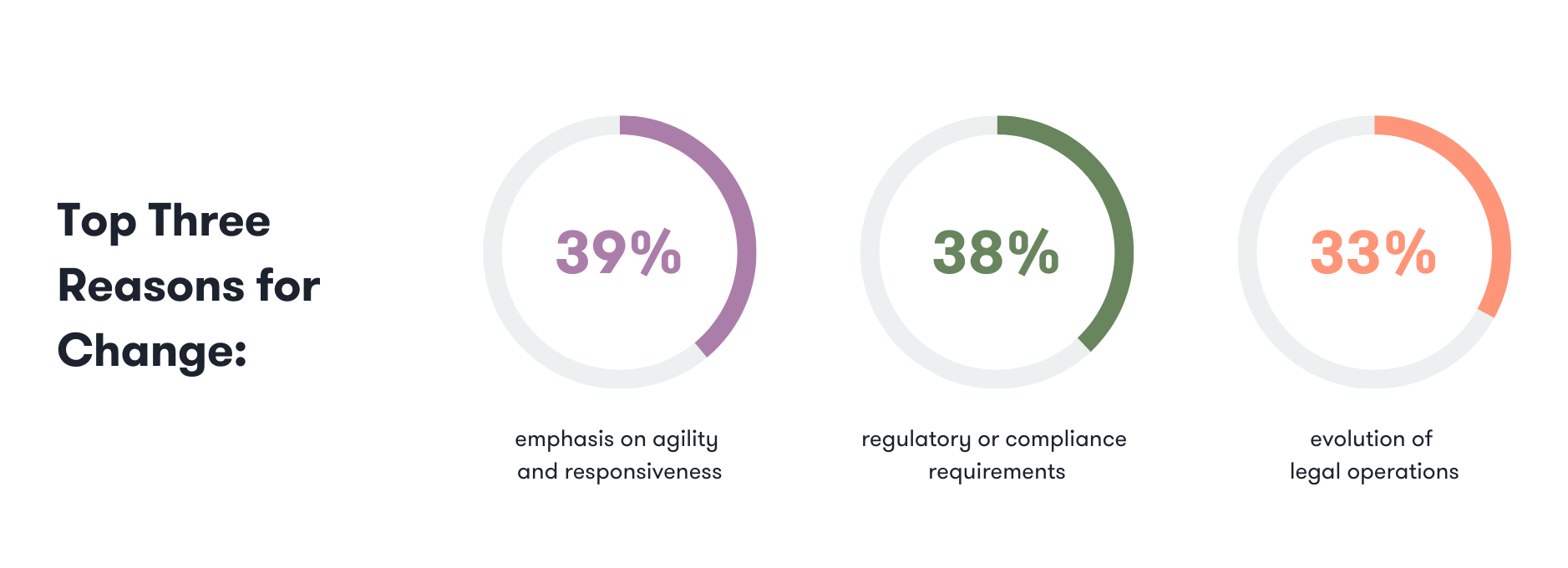
The top three reasons GCs say they need to adjust their current budgeting model are:
- 39% also point to renewed emphasis on agility and responsiveness.
- 38% agree it’s also due to changing regulatory and compliance requirements.
- 33% agree it’s due to the evolution of legal operations.
Of GCs planning to or who have already shifted their legal budgeting model:
- 84% currently use zero-based budgeting.
- 81% are enterprise GCs.
- 70% are SMB GCs.
3. Increasing CFO Tension
The changing landscape is putting legal departments at odds with CFOs.
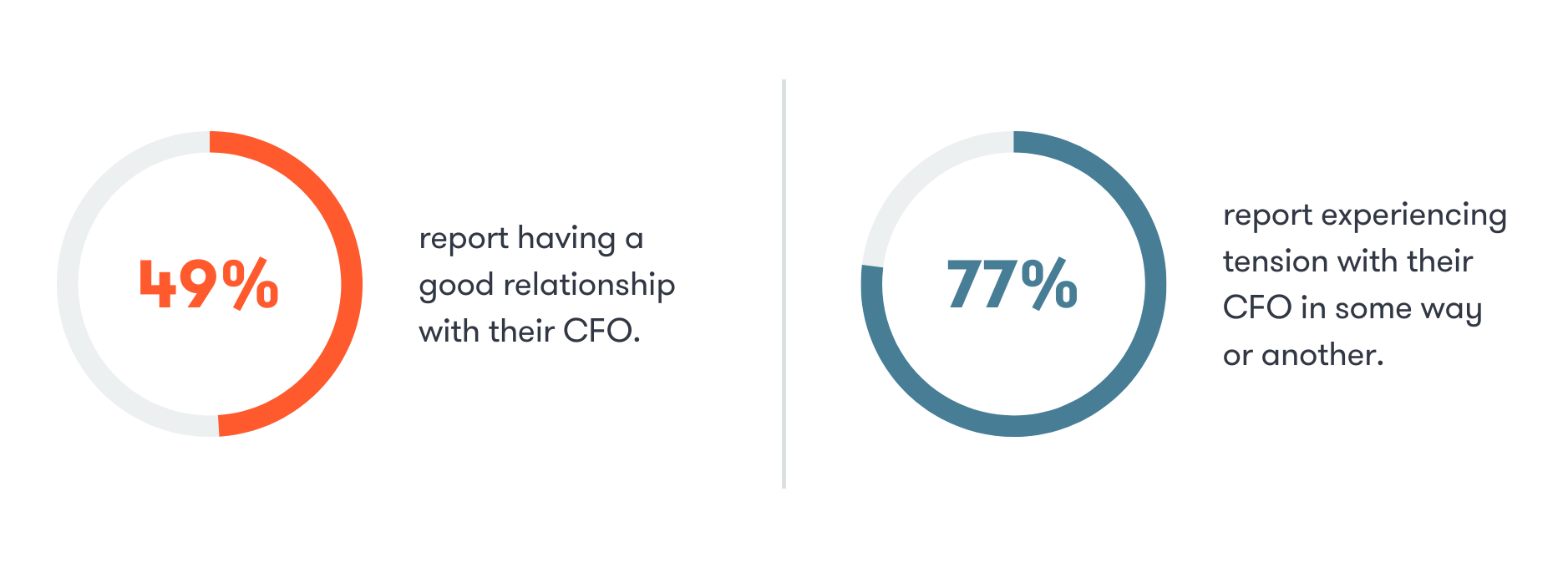
- Nearly half (49%) of GCs reported having a good relationship with their CFO.
- However, 77% have experienced tension with their CFO in some way or another.
The reasons for this tension include:
- Cost-cutting (28%)
- Misaligned priorities (27%)
- Lack of collaboration between departments (25%)
- Differences in personality (22%)
- Lack of resources from CFO (22%)
- Struggle to demonstrate the value of legal to CFO (20%)
- CFO doesn’t understand unique legal needs (18%)
4. Improving Metrics for Measuring Success
- 37% of GCs said their organization measures the legal team’s budget performance based on their use of outside counsel.
GCs must demonstrate the value of their expenditures, including technology and internal and external legal talent, using benchmark metrics. The top reported benchmarking metrics for tracking the legal team’s budget include:
- 39% by efficiency of invoice processing
- 38% by legal department headcount and cost per legal FTE
- 38% by legal spend by type of expenditure

The top three most important metrics for measuring the success of implementing new technologies are budget variance, compliance with service level agreements, and adoption rates.
Despite the potential benefits of the latest budgetary trends, GCs are bracing for disruption. Most participants said their companies’ investment plans may affect their legal department budgets for 2025. Technology and corporate restructuring, including reduced spending on human resources and mergers and acquisitions (M&A) driven by economic uncertainty, have led to increased uncertainty around legal budgeting. Strikingly, most legal leaders anticipate their organizations will decrease HR and M&A spending to address technology and legal AI concerns.
The coming corporate and economic changes may exacerbate tensions with the CFO as legal departments are asked to do more with less. GCs and CFOs need to have a productive, respectful relationship to chart a successful course for their companies’ futures. Switching to more flexible budget models, utilizing cost-effective legal talent, and quarterly forecasting based on the latest economic and technological trends will help legal departments improve their relationships with CFOs amid increased cost-cutting.
Conclusion: Legal Budgeting at a Crossroads
New technology and legal support models can help general counsels increase efficiency and reduce costs in today’s uncertain corporate environment. However, as promising as these trends may be, the legal department must communicate the benefits and importance of these changes to the CFO to maintain a positive working relationship.
To weather this time of uncertainty, legal departments should focus on:
- Shifting away from zero-based budgeting models to increase flexibility
- Implement technology to increase efficiency
- Adjust budgeting buckets as needed
- Spending on cost-effective services
- Aligning interests with the CFO regarding the latest legal operations
- Using benchmark metrics to measure the success of these tools
Adjusting the department’s budgetary approach in the face of new technology will soften this transition period. To learn more about the challenges and trends affecting GCs, download the full report. It clarifies how the latest technology is being used and the strategies legal departments are taking to make the most of this moment.