

.png)

When business is slow and associate staffing is high, law firms often offer secondees to clients for free just to keep their people busy. While the services may be “free”, they can and often do cost you in the end.
TL;DR
- “Free” secondees have significant hidden costs, including extensive supervision and oversight required from senior in-house counsel
- Short secondment durations and unpredictable availability limit the utility of “free” secondees for longer-term or full-time projects
- “Free” secondees act as loss leaders, with costs baked into law firms' ever-increasing billing rates
- Engaging “free” secondees can deter legal departments from using more cost-effective alternative legal service providers (ALSPs) that provide greater value and reliability
Law firms have two strategies that they tend to use year in and year out to maximize profit for their equity partners. One is raising their rates every year. The other strategy: When business slows and their staff is underutilized, law firms often pluck those unengaged associates and farm them out to select clients under the rubric of so-called “free” secondees.
They know general counsels are under perpetual pressure to “do more with less” in a struggle to maximize their department's capacity, efficiency, and well-being while keeping costs under control. On the face of it, “free” secondees appear to be an attractive offer, particularly given tight budgets, growing workloads, and stressed or even burned-out lawyers among in-house teams. And these “free” secondees allow law firms to build goodwill with their clients that they can use to get away with ever-increasing rates. For the law firm, it creates a virtuous cycle.
But this practice warrants closer examination by legal team leaders, as there are hard and soft costs associated with “free” secondees that can extend beyond the apparent zero on the invoice.
This article examines the hidden implications of using “free” secondees and provides a framework for general counsels to evaluate these offers within their broader talent and resource strategy.
By understanding the spectrum of real costs and operational considerations, in-house legal departments can make informed decisions about how, when, and why (or why not) to accept or reject offers of “free” secondees. In this way GCs can ensure their staffing strategy, work outcomes, and business continuity aren’t diluted by inexperienced or lower-quality talent, and that the jobs to be done maintain a desired standard of excellence within the constraints of the team’s budget.
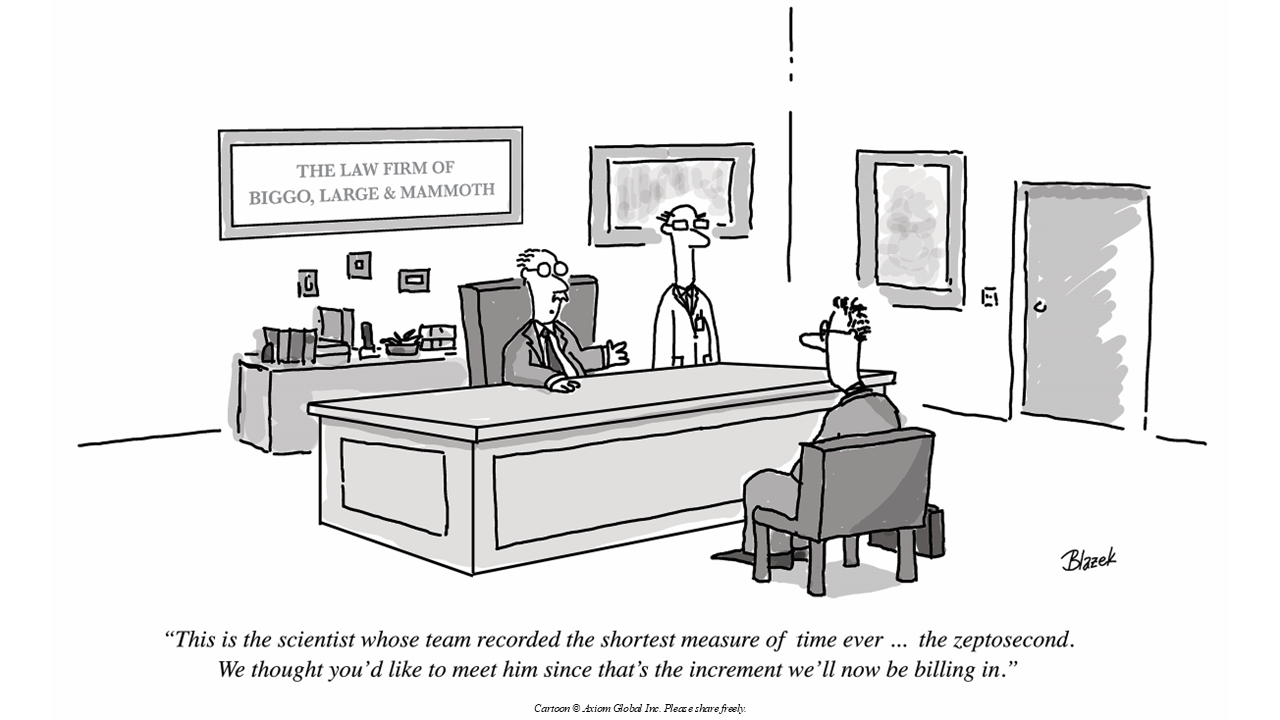
The cost of “free” secondee programs is baked into law firm’s overall pricing strategy, which includes a decade of rate inflation projected to be as high as 13% in 2025.
Realize Superior Value with Axiom
Work with top-rate, deeply experienced in-house talent at up to 50% lower rates than top law firms.

The Supervision Premium
When law firms offer “free” secondees, they typically deploy junior attorneys with just a few years of experience. While these lawyers can come from prestigious firms and have strong academic credentials, they generally lack practical experience, business acumen, and understanding of the in-house ethos that only comes from years of in-house work.
This experience gap generates a hidden soft cost: the time and resources your legal team—including senior counsel—will have to devote to the “free’ secondees to ensure they have adequate supervision and guidance.
The supervision premium extends beyond the basic training and oversight provided by your team. Senior in-house counsel must often review the “free” secondee’s work product more thoroughly, provide extensive context for assignments, and invest considerable time mentoring these junior attorneys on company-specific processes and requirements.
In effect, your team is giving the “free” secondees the free education and training their employer, your law firm, hasn’t invested in. It’s a soft cost that’s never tracked, but if the time were logged, the hours invested in increased management overhead would quickly erode any perceived cost savings, particularly when factoring in the opportunity cost of your senior attorneys’ time.
💡 Avoid the supervision premium by leveraging Axiom’s seasoned legal talent.
The Uncertainty Principle
The uncertainty principle is a fundamental concept in quantum mechanics first articulated by physicist Werner Heisenberg in 1927. It stipulates that the product of the uncertainties in position and velocity is equal to or greater than a tiny physical quantity, or constant (h/(4π), where h is Planck’s constant, or about 6.6 × 10⁻³⁴ joule-second). Only for the exceedingly small masses of atoms and subatomic particles does the product of the uncertainties become significant.
Our legal profession also has an uncertainty principle, and (thankfully) it’s not as complex, hard to understand, or hard to measure as quantum mechanics’— but it’s the formula for “free” secondee programs, which can result in an equally profound level of uncertainty and unintended consequences for the business.
The business formula for “free” secondee programs often has an inherent instability that can create costly operational surprises and challenges for in-house teams. These programs typically operate as overflow mechanisms for law firms, so the availability of “free” secondees can and does fluctuate wildly based on law firms’ other commitments and client demands.
When demand picks up and utilization increases, what was once a glut of associates put on engagements for “free” or very low cost can be recalled on little notice, leaving the in-house team high and dry. And during periods of high activity, such as the legal industry saw in 2021 and 2022, “free” secondee programs can vanish overnight, leaving legal departments in the lurch and scrambling to fill gaps that they were anticipating filling with some “free” labor.
It makes one wonder how often “free” secondee programs are used, unintentionally or otherwise, as a “bait and switch” tactic, enabling law firms to charge clients for once-free secondees (1) after they’re embedded with the in-house team, and (2) creating a gap to be filled when demand picks up—because they (rightfully) need the secondees back for paid hourly work. It would be a simple decision for any GC to decide the cost of losing their “free” secondee outweighs the cost of retaining them—converting “free” to “on the clock.”
In addition, most “free” secondee arrangements are structured as short-term placements, typically lasting only one to three months1. This brief duration limits their utility for longer-term or larger projects, extended leave coverage, or sustained periods of increased workflow. The resulting turnover creates additional churn and costs in terms of repeated onboarding, knowledge transfer, and relationship building with business stakeholders.
It’s another soft cost that, were it measured, would result in an expense that’s not typically a line item on an in-house team’s budget.
Loss Leaders For High Legal Fees
Marketers often use a tactic known as “dark patterns” to get customers to take actions they didn’t intend to take, or to prevent customers from taking actions they want to take. Dark patterns show up in user interface designs for digital ads, websites, apps, emails, IVRs, SMSes, and so on. Dark patterns are also used offline, such as in customer service scripts used by call center operators. One example: making it hard or nearly impossible to easily unsubscribe from a paid monthly service, whether online or by calling customer service.
.jpg?width=4905&height=5338&name=TCB-152637%20(1).jpg)
It could be argued that “free” secondees are Big Law’s version of a dark pattern. Here you’re offered “free” use of an associate that likely graduated from an elite law school and is super motivated and super smart. But they are also inexperienced. You might get an elite legal athlete, but they have very little experience in the practice areas and/or work product you need them to perform in.
That’s certainly not your intent when you agree to take on a “free” secondee. Your expectation is that you’ll have a sharp and effective lawyer who can quickly land, fit in, and help reduce your team’s workload and increase capacity. But what you get is someone who doesn’t understand the in-house ethos, or meet your minimum requirements for anything other than an entry-level position were you looking for an FTE.
The reality is the secondee appears to be “free” on paper, but they are, in effect, loss leaders within the law firm’s broader pricing strategy that help the law firm shift job training costs to their clients. Law firms typically offset “free” secondee programs through ever-higher rates on their core services, effectively blending the cost across their entire relationship with your organization.
In 2024, in-house teams experienced law firms rate increases that ratcheted worked rates up as much as 8.4%, according to Thomson Reuters. And Law.com reported higher increases will become the norm in 2025, writing “more big firms are going to approach hourly rates of $3,000 for partners and $1,000 for associates,” with Am Law 25 to 30 firms issuing “standard” rate increases of 10% to 13% in 2025. The costs of “free” secondees are baked into those rate increases, so you are, in fact, paying for that free lunch.
A Framework for Flexible Talent
By offering “free” secondees, law firms might prevent clients from developing more sustainable and cost-effective approaches to managing variable legal workloads, such as building relationships with ALSPs (like Axiom) that could offer top-rate, deeply experienced in-house talent at savings of 50% compared to traditional law firm rates.
The effect, unintended or otherwise, can discourage legal departments from partnering with ALSPs or using other innovative services that can help boost capacity while cutting costs. Less competition helps maintain high rates for traditional legal services, costing legal teams much more in the long run than they appear to save through “free” secondee programs.
With that in mind, here are some guidelines that can help you assess offers of “free” secondee programs and make thoughtful decisions that support your department’s goals, budget requirements, and the well-being of your team (and your daily focus):
- When evaluating “free” secondee programs, carefully assess the total cost of engagement including the cost of onboarding, supervision, potentially suboptimal work quality, reliability, predictability, and their short- and long-term strategic implications.
- Maintain relationships with multiple service providers, including ALSPs, to help ensure optimal flexibility and competitive pricing in your legal service delivery model.
- Look closely at the intersection of cost, in-house and overall legal experience, practice area specialization, and utilization risk (i.e., are the secondees at your disposal for the duration of the engagement or can the law firm recall the secondee with minimal notice when demand for their services increases?).
The old adage holds true: You get what you pay for … or, in this case, what you don’t pay for. The challenge for general counsel is to look beyond the lack of a price tag to understand the full impact and value equation of “free” secondee usage. Only then can you build a more effective legal department that delivers the outstanding work your organization expects, and a happy and productive team that is equipped for long-term success.
[1] Axiom data. The average duration of a secondment engagement with Axiom is 10-12 months.

