


The role of legal operations (legal ops) within corporate legal departments has become increasingly crucial in recent years. As companies face new technological challenges and evolving legal landscapes, the legal ops function has emerged as a key driver of efficiency, innovation, and strategic alignment. To better understand the current state and future trajectory of legal operations, Axiom commissioned Wakefield Research to conduct a comprehensive survey of 200 legal ops professionals across various industries and company sizes.
This groundbreaking research, set to be fully released in July 2024, offers invaluable insights into the world of legal operations today. While the complete findings are still under wraps, we're excited to share an exclusive preview of the key takeaways from this illuminating study. Let's dive into the top five revelations that are shaping the future of legal ops:
1. Budget Growth Defies Industry Trends
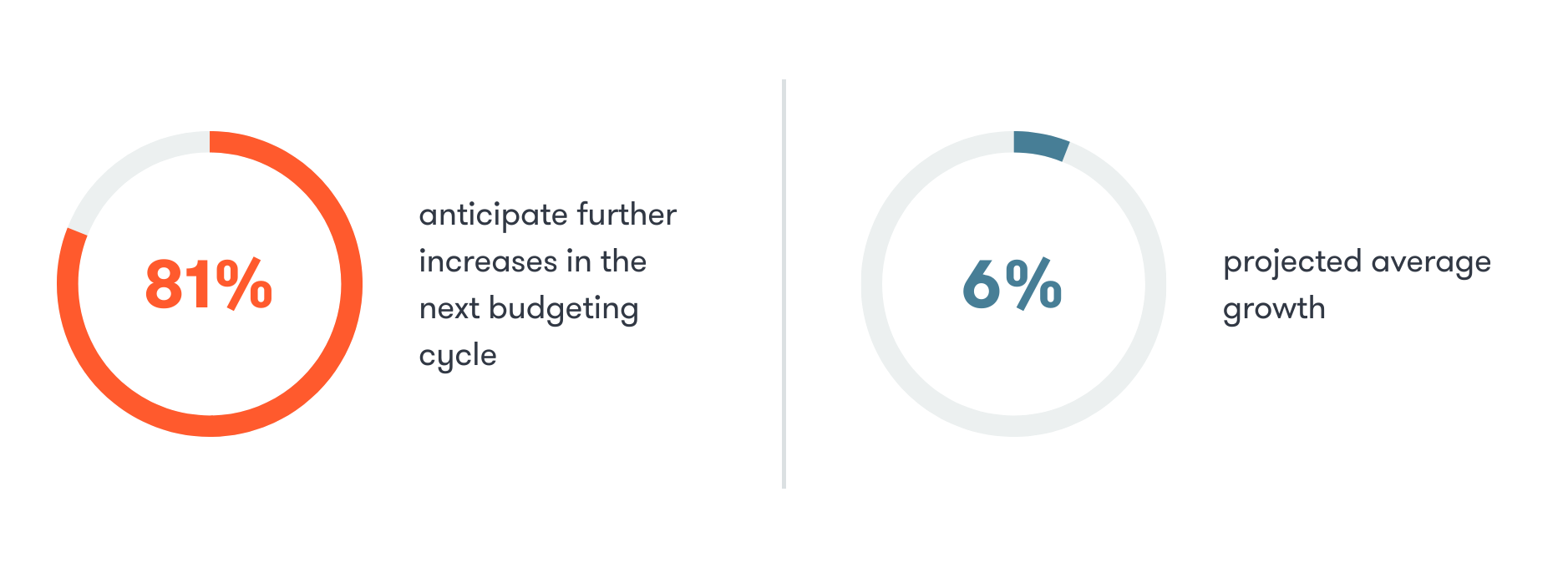
In a surprising twist, legal operations teams appear to be bucking the trend of widespread budget cuts affecting many legal departments. The survey reveals that a remarkable 83% of respondents saw budget increases last year, with an average boost of 5%. Even more encouraging, 81% anticipate further increases in the next budgeting cycle, projecting an average growth of 6%.
This financial vote of confidence extends to team expansion as well. An overwhelming 94% of respondents expect their legal operations departments to grow in the next two years, with nearly half (48%) predicting moderate to significant growth. These figures underscore the increasing recognition of legal ops as a vital component of successful in-house legal teams, particularly as artificial intelligence continues to reshape the legal landscape.
2. Interdepartmental Tensions Pose Significant Challenges
Despite the positive outlook on budgets and growth, the survey uncovered a persistent elephant in the room: tension between legal operations professionals and the in-house lawyers within the legal department. This friction, often rooted in power dynamics and decision-making authority, poses a significant threat to overall departmental success.
The numbers paint a stark picture:
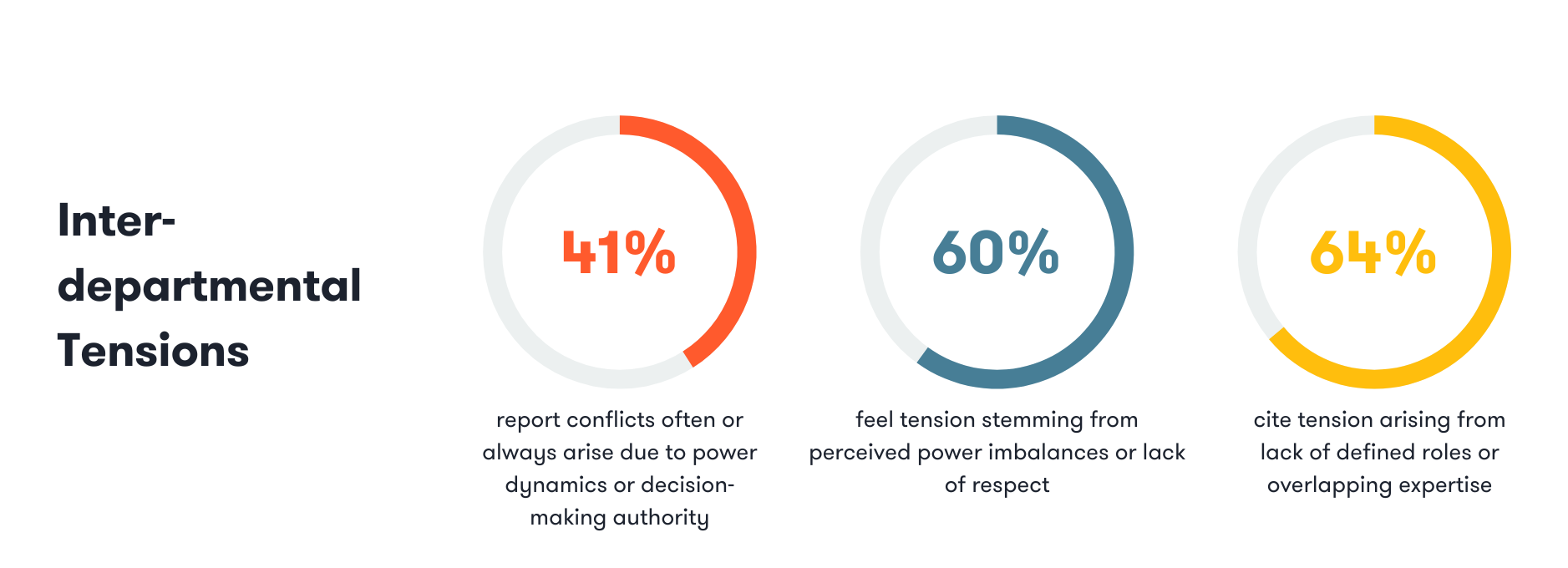
- 41% of respondents reported that conflicts often or always arise between the legal team and legal operations due to power dynamics or decision-making authority.
- 60% feel tension stemming from perceived power imbalances or lack of respect.
- 64% cited tension arising from a lack of defined roles/responsibilities or overlapping expertise.
Perhaps most tellingly, only 13% of legal ops professionals felt they played a crucial role in department decisions. This disconnect is further exacerbated by the fact that difficult colleagues and office politics ranked as the number one source of stress and burnout for legal ops professionals.
3. Technology Adoption Faces Resistance
While legal operations teams are often tasked with improving processes and implementing new technologies, the survey reveals significant hurdles in this area. Despite 100% of respondents having some influence over tech purchases and plans to implement new tools, many face an uphill battle when it comes to execution.
Key findings include:
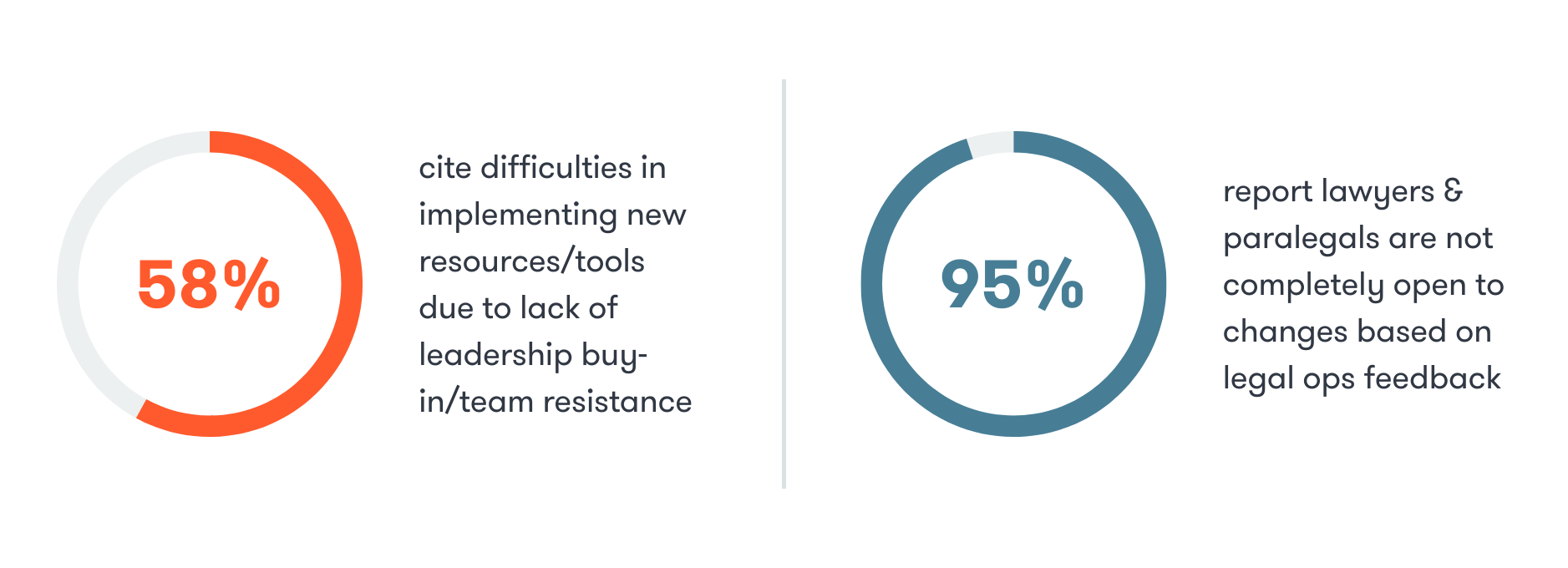
- 58% cited difficulties in implementing new resources or tools due to a lack of leadership buy-in or team resistance to change.
- 95% reported that in-house lawyers and paralegals are not completely open to making changes based on legal ops feedback and decisions.
This resistance to change is particularly concerning given the rapid advancements in legal technology, especially in the realm of artificial intelligence (AI) and virtual legal assistants.
4. AI Adoption Lags, Exposing Risk
The survey paints a concerning picture when it comes to AI adoption and governance within legal departments. Despite the transformative potential of AI in legal practice, most organizations appear to be ill-prepared for its implementation and management.
Alarming statistics include:
- Only 37% of organizations have policies in place for AI use.
- A mere 3% of AI tools used by legal teams have been explicitly approved by their legal departments.
- 96% of respondents admitted to knowingly using unapproved AI tools.
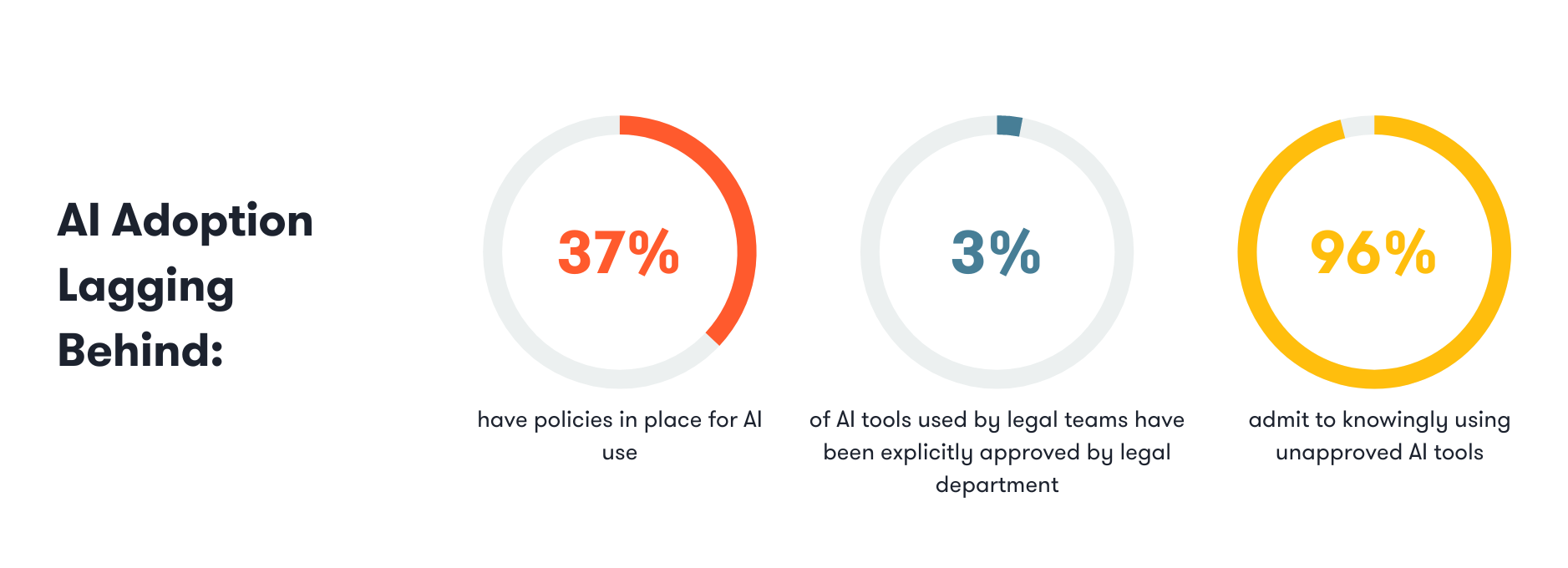
These figures highlight a significant gap between the rapid advancement of AI technology and the governance structures needed to manage its use effectively and ethically. This disconnect exposes organizations to potential risks and liabilities, underscoring the urgent need for comprehensive AI policies and approval processes.
5. Alignment Between Legal and Legal Ops is Critical
Despite the challenges highlighted above, there's a silver lining: universal recognition of the need for better collaboration between in-house legal teams and legal operations. Every single respondent (100%) agreed that bridging the gaps between these two functions would improve overall organizational performance.

Furthermore, 72% of respondents reported that their organizations are actively striving to foster cultures of collaboration and respect between the legal team and legal operations. This acknowledgment of the importance of alignment is a crucial first step toward addressing the tensions and challenges identified in the survey.
The Path Forward
As this preview of the Legal Operations Survey demonstrates, the field is at a critical juncture. While budgets and teams are growing, signaling increased organizational investment, significant challenges remain in terms of interdepartmental dynamics, technology adoption, and AI governance.
For legal departments to truly thrive in this evolving landscape, addressing these challenges head-on will be crucial. This means:
- Fostering better communication and clearly defined roles between legal and legal ops teams.
- Developing comprehensive change management strategies to ease the adoption of new technologies.
- Implementing robust AI policies and approval processes to mitigate risks.
- Continuing to invest in legal ops as a strategic partner in driving efficiency and innovation.
By tackling these issues, organizations can unlock the full potential of their legal operations function, driving better outcomes for their legal departments and businesses as a whole.
Stay Informed
This preview offers just a glimpse into the wealth of insights contained in the full 2024 Legal Operations Survey report. To dive deeper into these findings and gain a comprehensive understanding of the current state and future trajectory of legal operations, we encourage you to download the full report below.
Don't miss this opportunity to gain valuable insights that could shape your legal operations strategy for years to come. The future of legal ops is here – make sure you're prepared to lead the way.