



Adopting a legal department mission statement is critical to navigating the uncertain post-pandemic world. As stated in the recent 2021 Axiom General Counsel Survey Report on In-House Legal Department Mission Statements, Goals & Objectives during the pandemic, the prioritization of cost reduction over core department values was significantly lower among those legal departments with mission statements (58%) than those without (75%).
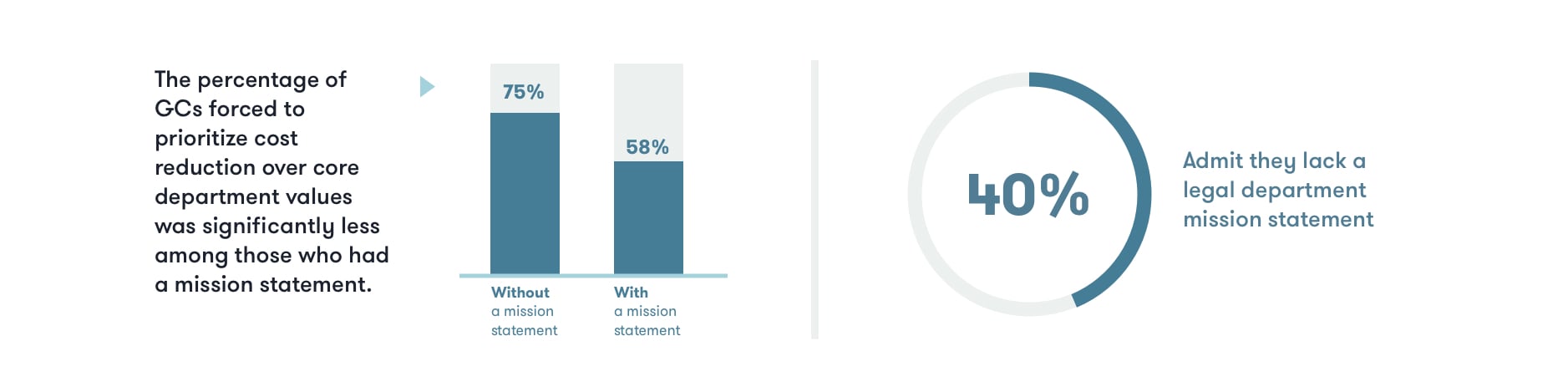
Only 60% of general counsel (GCs) reported having a mission statement in the report, even though 79% of GCs believe their role is to be the conscience of the company as a values-based general counsel (VBGC). Even among the 40% who have defined legal department mission statements, it’s never too late to reevaluate what should be prioritized, as values shift with the ever-changing environment. The findings of the report suggest departments with codified values are better able to manage crises, which can help improve a company’s bottom line, as well as ensure employee well-being is addressed. Whether refining a current statement or creating a new one, incorporating the mission into annual strategic legal department planning exercises is beneficial to adhering to company values.

Given the criticality of codifying values in order to navigate ongoing uncertainty, it is important that any mission statement be written thoughtfully in order to serve as an enduring legal department North Star. A structured legal department mission statement strengthens the department’s ability to adhere to its values, even beyond the team, into the values of the entire organization.
Here are five steps VBGCs can take to ensure their mission statement is useful, effective, and relevant.
1. Create a Constitution: The mission statement must not only clearly identify the roles and responsibilities of the legal department; it must codify its values and core principles. Think of the mission statement as the equivalent of a legal department “constitution.” Then think about the Bill of Rights: What are the values, rights, and responsibilities that every member of the legal team must adhere to and hold dear?
2. Build a Living Document: The magic of the Constitution is that it is enduring. Like constitutional texts, mission statements should embrace those “majestic generalities” that enable meaningful progress, modernity, and equality, even in the face of unexpected crises or events. In planning the initial mission statement, leaders should have contingency plans in place to ensure the overall values or business goals are not sacrificed. Planning for potential setbacks is essential when crafting the mission.
3. Don’t Be Afraid to Amend The Statement: Just as the Constitution has been updated to reflect societal change and progress, every GC must consider the occasional need to reassess and reevaluate their current mission on an ongoing basis, as priorities or goals change. No matter how these shift, however, the values should always be part of the team culture.
4. Build a Mission-Centric Team Culture: The mission statement must be championed by the GC and embraced by the team. It should serve at the North Star in guiding how team members can better partner with customers, department leaders, and each other. Moreover, the mission statement can’t just be words on a paper — it must be supported by action and investment, particularly as it relates to the ongoing values-based training of the in-house team.
5. Make the Mission Inform Hiring: This past year and a half highlighted the need to focus on mental health, diversity, and critical thinking. GCs should build teams that live these values while providing high-quality legal expertise. In that spirit, the mission statement must not only apply to current employees — it must also inform any future hires.
💡 Support your department without compromising on values or cost.

