
Philadelphia Healthcare & Life Sciences Lawyers
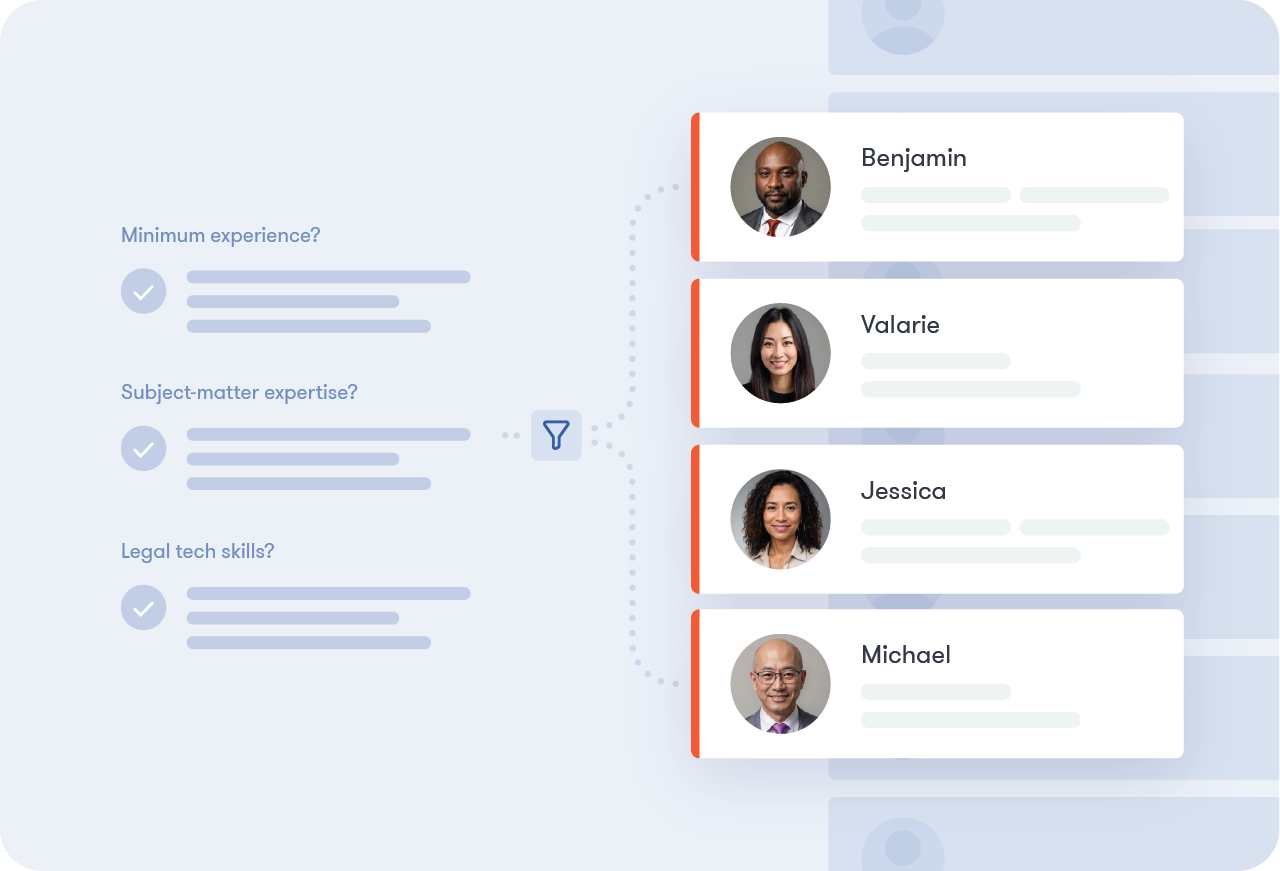
Axiom helps you find & engage the right business-oriented healthcare & life sciences lawyers in Philadelphia, throughout the United States, and globally on a full-time, part-time, or as-needed basis at affordable rates.
















How It Works
Healthcare & Life Sciences Lawyers in Nearby Cities
- Healthcare & Life Sciences Lawyers in Pittsburgh, PA
- Healthcare & Life Sciences Lawyers in Allentown, PA
- Healthcare & Life Sciences Lawyers in Erie, PA
- Healthcare & Life Sciences Lawyers in Reading, PA
Healthcare & Life Sciences Lawyers in Other Cities
- Healthcare & Life Sciences Lawyers in New York City, NY
- Healthcare & Life Sciences Lawyers in Los Angeles, CA
- Healthcare & Life Sciences Lawyers in Chicago, IL
- Healthcare & Life Sciences Lawyers in Houston, TX
- Healthcare & Life Sciences Lawyers in Phoenix, AZ
- Healthcare & Life Sciences Lawyers in San Antonio, TX
- Healthcare & Life Sciences Lawyers in San Diego, CA
Practice Areas similar to Healthcare & Life Sciences Law
- Commercial Real Estate Lawyers
- Corporate & Commercial Lawyers
- Data Privacy & Cybersecurity Lawyers
- Energy Lawyers
- Finance & Capital Markets Lawyers
- Intellectual Property Lawyers
- Labor & Employment Lawyers
- Legal Support Professionals
- Litigation & Dispute Resolution Lawyers
- M&A Lawyers
- Regulatory & Compliance Lawyers
- Technology & AI Lawyers
Local healthcare and research considerations
Clinical Research and Commercialization Across University City
A biotechnology company working with a University City research institution may need to coordinate sponsored research terms, clinical trial arrangements, intellectual property rights, and data-use restrictions before a program can move forward. Relationships involving Penn Medicine, the Children’s Hospital of Philadelphia, and nearby research organizations often connect academic investigators with manufacturers, software providers, laboratories, and commercial sponsors. Legal review frequently centers on ownership of inventions, publication rights, milestone obligations, access to study data, and responsibility for regulatory submissions. Misalignment among these agreements can delay a trial, limit future licensing options, or create uncertainty over who controls commercially valuable results.
Cell and gene therapy programs create additional pressure because research, manufacturing, and patient-facing activities may be divided among several parties. A company may rely on an academic collaborator for early research, a contract manufacturer at the Navy Yard for production, and clinical sites across the region for patient administration and monitoring. Agreements must account for chain of custody, quality responsibilities, adverse-event reporting, manufacturing changes, and the use of patient samples. The practical task is to ensure that operational responsibilities match the regulatory and contractual commitments made to investigators, health systems, investors, and development partners.
Axiom’s healthcare and life sciences lawyers can support research collaborations, licensing arrangements, clinical trial contracts, manufacturing agreements, and related diligence where scientific timelines and commercial rights depend on coordinated documentation.
Operational Risk for Regional Health Systems and Healthcare Businesses
Healthcare organizations operating through Center City, North Philadelphia, and the surrounding suburbs often manage complex relationships with physicians, technology vendors, staffing providers, insurers, and outpatient facilities. A system affiliated with Jefferson Health, for example, may need to evaluate how a new service arrangement affects billing responsibilities, patient privacy, referral practices, and vendor access to clinical systems. Review may focus on business associate terms, reimbursement conditions, physician compensation structures, audit rights, and termination provisions. These details matter because a poorly structured arrangement can disrupt revenue, complicate patient operations, or create regulatory exposure after implementation.
Transactions involving physician groups, specialty practices, digital health companies, and life sciences service providers require close attention to how the business actually operates. Buyers often examine coding and billing practices, HIPAA compliance, government-program participation, licensure, clinical research obligations, and existing relationships that could raise concerns under the Anti-Kickback Statute or Stark Law. Contract language may also need to address change-of-control consents, continued access to electronic health records, cybersecurity incidents, and responsibility for pre-closing compliance issues. For businesses expanding between Philadelphia and the King of Prussia commercial corridor, these questions can affect valuation, closing conditions, and the timeline for integrating systems and personnel.
Lawyers from Axiom can help healthcare organizations and life sciences companies review commercial arrangements, assess transaction-related compliance concerns, negotiate risk allocation, and align operational practices with contractual and regulatory requirements.