














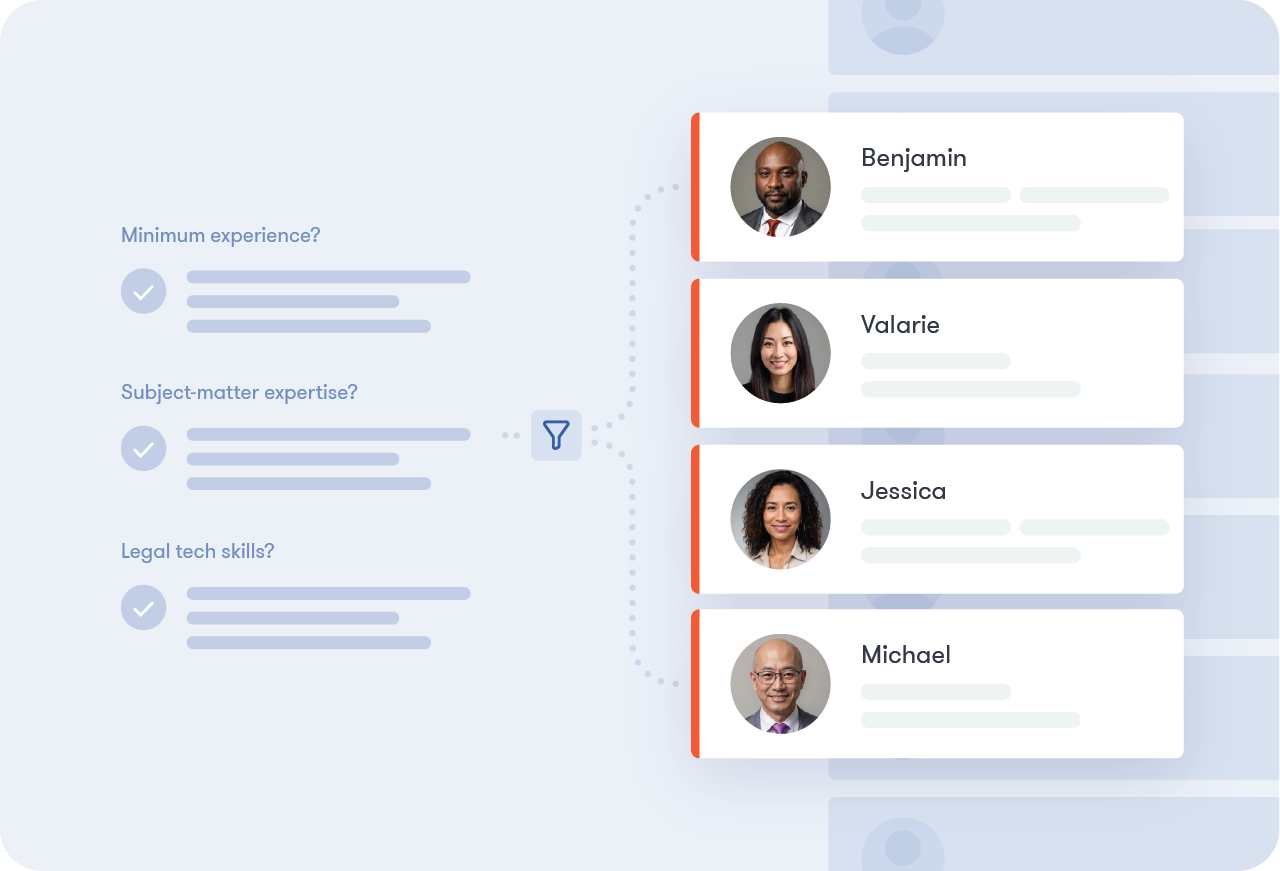


How It Works
Antitrust & Competition Lawyers in Nearby Cities
- Antitrust & Competition Lawyers in Pittsburgh, PA
- Antitrust & Competition Lawyers in Allentown, PA
- Antitrust & Competition Lawyers in Erie, PA
- Antitrust & Competition Lawyers in Reading, PA
Antitrust & Competition Lawyers in Other Cities
- Antitrust & Competition Lawyers in New York City, NY
- Antitrust & Competition Lawyers in Los Angeles, CA
- Antitrust & Competition Lawyers in Chicago, IL
- Antitrust & Competition Lawyers in Houston, TX
- Antitrust & Competition Lawyers in Phoenix, AZ
- Antitrust & Competition Lawyers in San Antonio, TX
- Antitrust & Competition Lawyers in San Diego, CA
Practice Areas similar to Antitrust & Competition Law
- Commercial Real Estate Lawyers
- Corporate & Commercial Lawyers
- Data Privacy & Cybersecurity Lawyers
- Energy Lawyers
- Finance & Capital Markets Lawyers
- Healthcare & Life Sciences Lawyers
- Intellectual Property Lawyers
- Labor & Employment Lawyers
- Legal Support Professionals
- Litigation & Dispute Resolution Lawyers
- M&A Lawyers
- Regulatory & Compliance Lawyers
- Technology & AI Lawyers
Local competition considerations
Consolidation Across Philadelphia’s Healthcare and Life Sciences Market
A hospital affiliation, physician-practice acquisition, or biotechnology joint venture can raise competition questions well before the parties reach a final agreement. Philadelphia’s concentration of health systems, research institutions, specialty providers, and life sciences companies creates transactions involving overlapping services, referral networks, intellectual property, and access to specialized facilities. Antitrust lawyers reviewing deals around University City’s healthcare and research community often examine market definition, competitive overlap, customer alternatives, and the exchange of sensitive information during diligence. These issues can affect transaction structure, regulatory filings, integration planning, and the amount of time required to reach closing.
Commercial collaborations may require similar scrutiny even when no acquisition is planned. A company developing therapies near the Navy Yard may enter a licensing arrangement, research partnership, manufacturing alliance, or distribution agreement that limits where products can be sold or which partners can participate. Review may focus on exclusivity periods, territorial restrictions, bundled offerings, access to essential technology, and provisions that affect future competitors. The business concern is often preserving the value of the collaboration without creating restrictions that draw regulatory attention or reduce strategic flexibility.
Axiom’s antitrust lawyers can support merger analysis, joint venture review, information-sharing protocols, and the negotiation of competition-sensitive terms involving healthcare, research, and life sciences organizations.
Pricing, Distribution, and Workforce Risk in a Regional Commercial Center
Philadelphia’s position between major Northeast markets creates competition concerns for distributors, transportation providers, manufacturers, and consumer-facing businesses operating through the Delaware River port facilities, Philadelphia International Airport, and regional warehouse corridors. Supplier and customer agreements may include resale pricing provisions, most-favored-nation clauses, exclusive territories, volume incentives, or limits on working with competing platforms. Legal review often tests how those provisions operate in practice, including their effect on smaller rivals, customer choice, and access to key channels. A restriction that appears commercially routine can create cost exposure or contract uncertainty when several competitors depend on the same suppliers or infrastructure.
Workforce practices and industry communications also require attention. Employers in Center City and the King of Prussia business corridor may participate in trade groups, benchmarking exercises, or recruiting relationships that involve compensation data and hiring practices. Companies often look closely at no-poach language, wage information exchanges, competitor contacts, bidding procedures, and employee movement between related businesses. The practical task is to separate legitimate collaboration from conduct that could be viewed as coordination, bid rigging, market allocation, or an improper restraint on hiring. Lawyers from Axiom can help businesses assess these arrangements, develop practical competition protocols, review contract terms, and respond to regulatory inquiries or disputes tied to pricing, distribution, procurement, or workforce activity.